Featured

Herbal Mocktails aka Digestive Bitters: 5 herbs to support Digestion.

Did you know that as we age our stomach acid levels decrease? Did you know that stress is a huge factor in how our bodies process the food we eat? If you have ever dealt with reflux, bloating, upset stomach, nausea, constipation, diarrhea … you know that stomach issues can ruin your day and most people would like to avoid these issues if at all possible!

The good news is that we can improve digestion before, during, and after eating with a variety of herbs that promote the secretion of digestive enzymes, bile (which breaks down fats) and help soothe stomach upset that comes from poor stomach emptying due to low digestive enzymes and stomach acid.

My favorite way to aid digestion is with digestive bitters. Taking bitters 20-30 min before eating preps the stomach for food by stimulating enzymes and acids to form. I love to take a dropper full of digestive enzymes in a glass of sparkling water as I cook dinner and another glass as I eat my meal. It makes a great Herbal Mocktail and is much better for your body than drinking alcohol. Here is a list of herbs that I like to use for digestion:

1.) Ginger: This herb is a powerful anti- inflammatory herb as well as being great for soothing nausea and sparking your digestive fire. It also helps with bile secretion, fat digestion, general stomach irritation and gas. It’s peppery hot/sweet flavor is a bit much for some people but drinking it as a cold or hot tea is a great way to tone down it’s heat.

2.) Gentian: This is by far one of the most bitter herbs you can ingest. I only add a small bit to my digestive bitter blend. The bitterness is what increases gastric juices and saliva. It is the best plant you can find for increasing hydrochloric acid so this herb is extremely helpful in getting the stomach prepared for digesting. According to Matthew Wood ” the typical “gentian person” lacks the ability to connect with and trust their instincts, leading them to worry and look for acceptance elsewhere or jump to the wrong conclusion, causing eventual feelings of depression, discouragement, and uncertainty that can build up to complete panic. It’s also appropriate in situations where stronger people try to produce anger, trigger emotions, or prompt people to distrust their own instincts.” (Wood, 2008).(Do not use in pregnancy or if you have ulcers)

3.) Coriander: If your poor digestion is connected to stress (and I bet it is), animal studies show that coriander seed is nearly as effective in alleviating anxiety and improving stress-coping abilities as the prescription drug diazepam and can benefit those at risk of stomach ulcers. It is also included in formulas that address irritable bowel syndrome. It is a very soothing herb!

4.) Cardamom: this herb is a great soother and balances out the harsh bitterness of Gentian. It enhances digestion by increasing the flow of oxygen and blood to the digestive tract. It is very helpful for counteracting spasms associated with irritable bowel and reducing burping, acid reflux and nausea.

5.) Fennel is a known anti-inflammatory, antispasmodic, carminative, diuretic, and expectorant and has been used in digestive blends by Native People. I often keep a little bit of dried fennel in my car to chew on after a heavy restaurant meal or a rushed fast food meal. I love harvesting fresh fennel and eating the spicy sweet seeds right off the stem!

Recipe for Digestive Bitters:

Dried Grapefruit Peel:

peel a grapefruit and scrape as much of the pith off of it as possible. Slice your peel into thin strips. Leave to dry (top of the fridge is a great area but don’t forget about them up there!)

In a 1 quart Jar add:

Dried peel from a baseball sized grapefruit

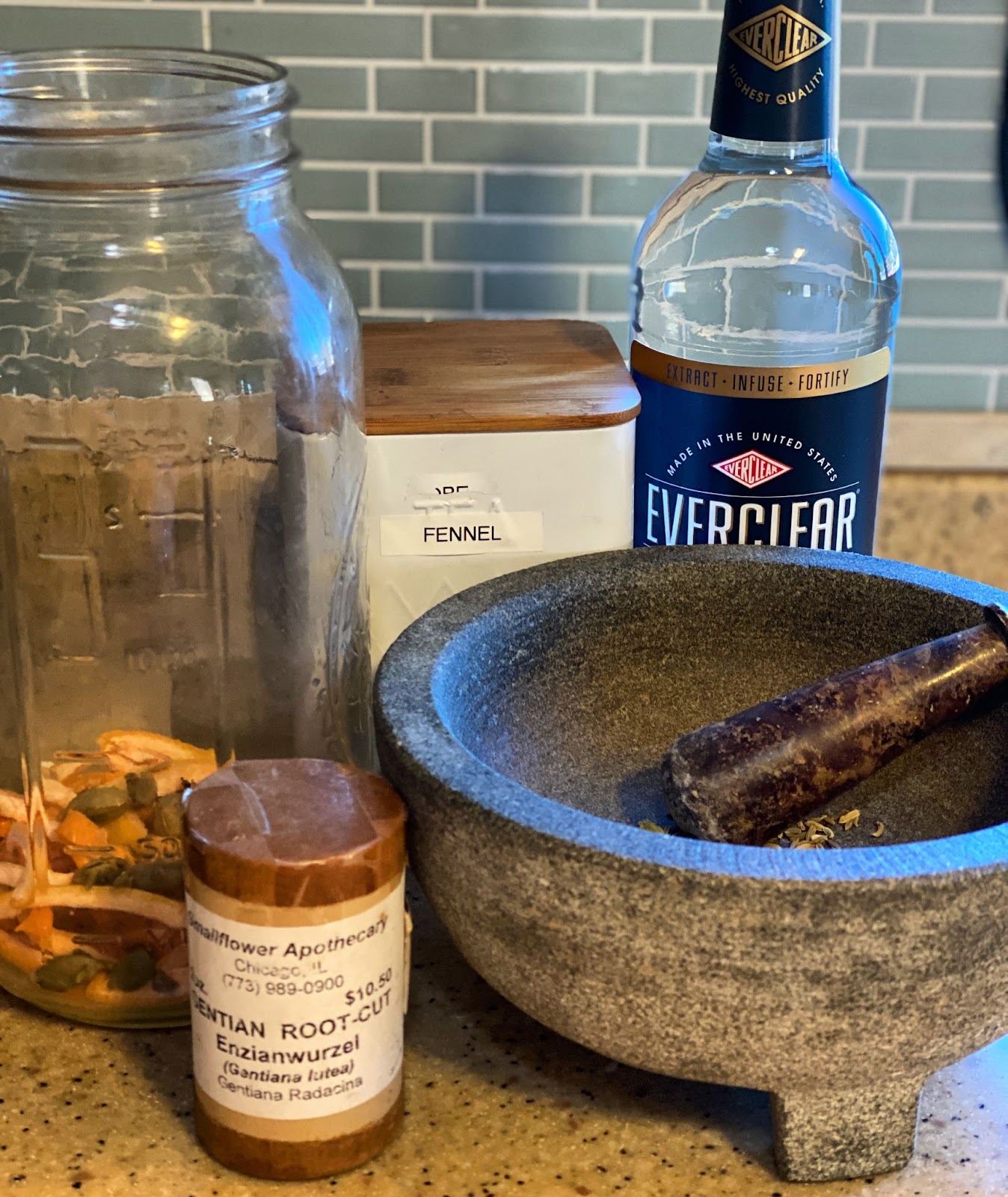
up to 3 small pieces of Gentian Root

5-8 cardamom pods (pinch them to open them)

1 tsp fennel seeds

1 tsp Coriander seeds

Fill the jar with good quality vodka (I prefer Titos, everclear is a cheaper alternative) and wait 4 weeks. Your grapefruit and cardamom will absorb some liquid so make sure you top off your bitters if the liquid level seems a bit low.

I like to serve a dropperful of this in an 8 oz can of sparkling water over ice as a great way to spark the digestion before, during or even after a meal.

#digestion #digestivebitters #herbs #herbalism #herbalist #herbsforstress #herbsfordigestion #ibs #nausea #herbalcocktail #cocktail #mocktail
Seasonal Allergies are the worst

If you have been dealing with fatigue, stuffy nose, runny nose, headaches, itchy eyes, brain fog, and sore throat that gets worse when you are outside, you might have seasonal allergies. (I’m not a doctor and this isn’t medical advice).

If your allergies are triggered by pollen, spring can be a rough time of year for you.  Here are some things that might help.

Reducing exposure:

  1. Keep all doors and windows in your house closed, get the highest rated HEPA filters for your furnace, and run the whole house fan often. An air purifier next to the bed wouldn’t hurt either. Wash bedding and curtains often, clean blinds, and keep windowsills dust free, especially in sleeping areas.
  2. Shower immediately after coming in from being outside, especially if you have long hair.  Wash pets frequently and keep them out of sleeping areas.  Use a Netti pot to rinse nasal passages and Nasya oil to lubricate nasal tissue.

Reducing Reaction:

  1. 6 weeks before pollen season start drinking nettle tea and taking quercetin. If you are already suffering drinking the tea will help but it will take a while to bring symptoms down.
  2. Avoid sugar, alcohol, and junk food as much as possible. Your body is at war with the outside world, give your body good nourishment to help win the battle.  Dark leafy greens, brassica family veggies, and any vegetable you enjoy eating should be on your plate at every meal.  If you are constipated, the histamine cannot exit your body.
  3. Your liver is responsible for breaking down histamine, one of the enzymes it uses is glutathione.  If you can find S-glutathione as a supplement it will help your liver do its job. Tylenol depletes glutathione so avoid using Tylenol when sick or experiencing allergies.

Other suggestions:

  1. Eat quercetin-rich foods such as apples, honey, raspberries, onions, red grapes, cherries, citrus fruits, and green leafy vegetables. Among vegetables and fruits, quercetin content is highest in onions. (Quercitin is fat soluble so fat and lecithin help absorption.)
  2. Pea sprouts contain the highest amount of DAO (diamine oxidase) found in food and it is difficult to turn DAO into a supplement form.  DAO helps break down histamine in the body.  If you can sprout your own peas and eat the sprouts daily this will be a big help.
  3. Stay hydrated.  This might mean drinking more water, this might mean adding electrolytes to your water.
  4. Sweating and the use of a Sauna to remove toxins can be helpful if available.

Supplements to consider:

  1. 2grams spirulina per day can reduce allergic symptoms by about 75% in some studies. The maximum effect is reached after taking it for 4 months.
  2. Vitamin A reduces mast cell burden, methylation is responsible for the histamine content of mast cells and basophils which means B multivitamins are also important.
  3. Cold Pressed black seed oil has had a lot of promising research as well.  Taking black seed oil by mouth daily might improve allergy symptoms in people with hay fever. Taking black seed by mouth along with asthma medicines can improve coughing, wheezing, and lung function in some people with asthma. But it seems to work only in people with very low lung function before treatment.

I make a tea for seasonal allergies that has helped my family survive spring for the past 7 years. It contains nettle, peppermint and stevia. You can find it in my etsy shop….

Seasonal Allergy Supp.ort Tea ‘: Make 16oz in the morning drink throughout the day for best relief.

Herbal actions of Nettle: Alterative, Antihistamine, Anti-inflammatory, Astringent, Diuretic, Galactogogue, Hemostatic, Nutritive, Rubefacient, (mast cell stabilizer, anti-histamine)

Herbal actions of Peppermint: Antispasmodic, Carminative, Antimicrobial, Analgesic, Diaphoretic, Stimulant, Nervine, Anti-emetic, (Soothing, calming, helps with cough)

Herbs that Support ADD/ADHD

I’m pretty sure everyone has experienced a day or two where their brain feels muddled and they struggle to concentrate.  Maybe you have had a hard time organizing tasks and information? Maybe you have struggled with remembering details or even remembering where you put your keys?  Sound familiar?

If this is something that you struggle with daily, or if you have an official diagnosis I’d like to present some herbs that might help.  Keep in mind, I’m not a doctor or a pharmacist, I am not giving medical advice, I do not know what you are currently taking and what health conditions you have going on, I am only presenting information that might help you and it is your responsibility to discuss any herbs or supplements you decided to take – with your doctor and pharmacist.

One of the issues that I struggle with the most in dealing with my ADD is lack of focus.  Diet and exercise play a huge role in this but Rhodiola Rosea has been very helpful to me and my family to gently help the brain pay better attention.

Rhodiola Rosea: Energy and Focus

Rodiola Rosea has a long history of use in many cultures with its first documented usage in 77CE. In modern usage, rhodiola is best known for its adaptogenic properties, helping to restore and maintain homeostasis of physiological systems in response to stress. It is know for its energizing and healing properties as well. In animal studies, extracts of rhodiola, seem to enhance the transport of serotonin precursors, tryptophan, and 5-hydroxytryptophan into the brain. It is also an adaptogen and helps your body balance its stress response.  The effects go so far as to help in depression, chronic fatigue and other  mood and energy disorders developing subsequent to intense physical or intellectual strain, influenza and other viral exposures, and other illness. I like to use one dropperful (Tincture: 1-3 mL (1:5, 50%) 3x/day )  in the morning and early afternoon.  While it can be taken up to 3 times daily I don’t take it in the evening because it is energizing.  (source and more info can be found here). It is not recommended for bipolar disordor or in conjunctions with medicine containing MAOIs or SSRIs. Always consult your doctor or pharmacist. I found no information about dosing in children, or safety in pregnancy or nursing.

Gotu Kola/ Centella/Brahmi (Learning retention, Nervine)

Gotu Kola is another herb with a long history of use both in Ayurveda and Traditional Chinese Medicine and has many studies confirming its neuroprotective activity. It contains a vast number of triterpene saponosides as well as several flavonoid derivatives including quercetin. Its positive effects on brain aging have been generally attributed to its two major triterpene saponosides; asiatic and madecassic acids.  It has been studied extensively in Alzheimer’s, Parkinson’s, and other neurodegenerative diseases. the extracts may positively influence neuronal morphology and caused a significant augment in dendritic arborization in neurons in mice. (That’s the nerd version of the herb, source and more info can be found here)

Gotu kola has a wide range of actions, working as an anti-inflammatory, nervine tonic, rejuvenative, vulnerary, alterative, diuretic, antipyretic, cardioprotective, immunostimulant, anticonvulsant and thyroid stimulant.  It is also widely regarded as an adaptogen.  While the mechanism is not known, the herb improves vascular tone and protects against (and reduces symptoms of) cardiovascular disease. This vascular support may be linked to gotu kola’s usefulness in increasing circulation to the brain and extremities. A major mechanism that contributes to gotu kola’s anti-anxiety effects are its modulation of gamma-aminobutyric acid (GABA), an inhibitory neurotransmitter that induces feelings of relaxation and calm. For me, it signals my brain that I can be done with my day and go to sleep but it doesn’t cause sleepiness. If you have racing thoughts when you are headed to bed at night, this herb might be of benefit. I use one dropperful of a tincture 2x a day, this is helpful before bed as well due to its relaxing qualities. (Tincture: 3-8mL/day of 1:1 extract)  

Gotu kola is generally accepted as a gentle herb, contraindicated only where there is a known allergy.  Most sources show that the herb is safe in pregnancy, breastfeeding, and for children’s use. people with fat malabsorption issues, deficiency of vitamins A, D, E, and K, some upper GI irritation, and cholestasis should use caution.  Always consult with your doctor or pharmacist before adding herbs to your wellness routine.

Lionsmane/Hericium erinaceu

Lionsmane isn’t an herb, it’s a mushroom that is known for being beneficial in neuroprotection, neurotrophic activity, cognitive function, neurodegenerative diseases, ischemic stroke.

While its exact mechanisms of action are still being studied, there are two compounds that have been isolated from Lion’s mane mushroom and looked at in regards to brain health. Of particular interest are hericenones and erinacines, which are believed to occur only in Hericium spp. Hericenones are isolated from Lion’s mane fruiting bodies, and erinacines are isolated from the mycelium. Both hericenones and erinacines are low molecular weight compounds that potentially cross the blood-brain barrier.

Hericenones have shown a strong stimulatory effect on the biosynthesis of nerve growth factor (NGF) in vitro while Erinacines are cyathin diterpenoids that appear to stimulate the synthesis of NGF. To date, 15 erinacines (erinacines A–K and P–S) have been identified. Several erinacines show neuroprotective activity.

One of the best pieces of news for helping my husband with his ADD is that oral supplementation with Lion’s mane induced a statistically significant improvement in spatial short-term and visual recognition memory in studies done on wild-type mice. What this means in practical terms is that he can remember where he put his keys! 

To date, there has been no concerted investigation into the use of Lion’s mane mushroom in pregnancy and lactation. Due to the fact that allergies and sensitivities to mushrooms are not unusual use caution when trying out lions mane if you have other mushroom sensitivities

It is best to supplement with preparations of Lion’s mane that use a combination of aqueous and alcohol extraction (called a double decoction) to ensure the whole spectrum of contents is present. The dose of Lion’s mane-dried fruiting body recommended for increasing NGF production is 3–5 g per day. A dose of 250 mg of 96% Lion’s mane dry powder three times a day for 16 weeks was associated with significant improvement on a dementia rating scale in subjects with mild cognitive impairment. I take 1 dropperful 1-3x daily (Tincture: Approximately 1-3 mL (1:3 in 60% for fresh fruiting body, or 1:5 in 40% for dried)) Source and more info can be found here.

There are many more herbs that can be useful for symptoms of ADD/AHD and these aren’t just limited to those with an official diagnosis. They help with focus, learning, memory, and stress support. In some cases, they can be useful supporting those experiencing anxiety and/or depression. It’s important to understand that while herbs are for everybody, not every herb is for every body. If you have an unpleasant experience with an herb- that herb is not for you, but that doesn’t mean that herbalism itself is unhelpful. I have many videos on TikTok (@tandtapothecary) regarding these herbs that I will slowly be uploading to youtube. Stay tuned and always do your own research!

Herbal First Aid for the coming Apocalypse

Skin is the largest organ in your body. It protects you from infection and functions as your armor against a host of microbes that are trying to invade your body. Normally it does this job quite well, but anything that compromises the integrity of your skin can be a potential source of disease or infection. Here are 3 types of things to keep in your first aid kit for your skin.

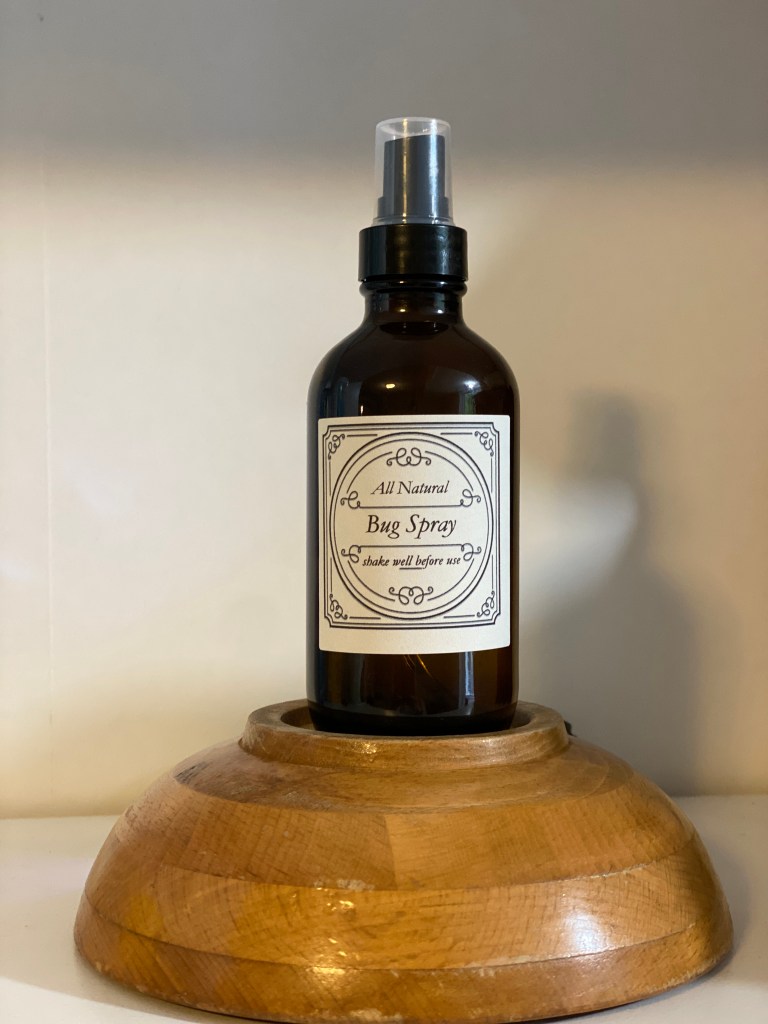
1.) Bug Spray. It sounds like such a minor thing but I live in an area where Lyme disease and Alpha-Gal are real concerns. I’m also severely allergic to mosquito bites and develop a rash that can easily turn into a secondary infection.  I have to keep the bugs away and that’s why I keep bug spray in my first aid kit.  I also keep an anti-itch stick to keep the bug bite from turning into a huge rash.  It really helps with the itching! You can purchase Bug Spray from me or use this recipe to customize your own.

Herbal Bug Spray

Bug Spray

  • 4 T distilled water
  • 2T vodka
  • 5-6 drops EO

(The oil floats on top of the water, make sure you shake this well before each use.)

EOs for mosquitos:                               EOs for ticks:

  • Peppermint,                               Rose Geranium
  •  Sage                                        Sweet Myrrh
  •  Lemongrass,                            Tansy
  •  Lemon,                                     Eucalyptus
  • Thyme,
  •  Lavender, 
  • Sage

2.) Wound Care: Cleaning

Antimicrobial Herbs to forage:

  • Dandelion (leaf and root)
  • Yarrow (aerial parts)
  • Yellow Dock (root)
  • Oak (bark)
  • witch hazel (leaf and bark)
  • plantain (leaf)

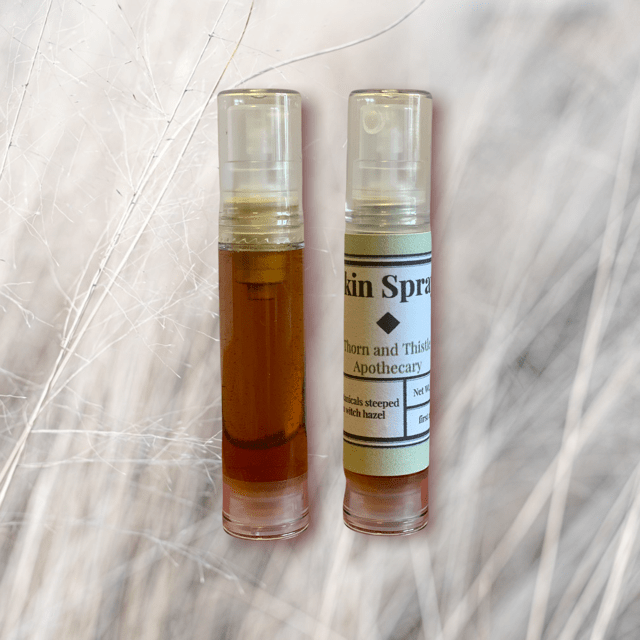
Once you have your antimicrobial Herbs you can tincture them by steeping them in alcohol (vodka) or witch hazel.  I like to keep mine in a small spray bottle and I use 8 different botanicals soaked in witch hazel with a small amount of alcohol added.  You can buy mine here:

First Aid Skin Spray

3.) Wound Care: Healing

Herbs to speed healing:

  • Calendula (flower)
  • Hops (strobile)
  • Myrrh (resin)

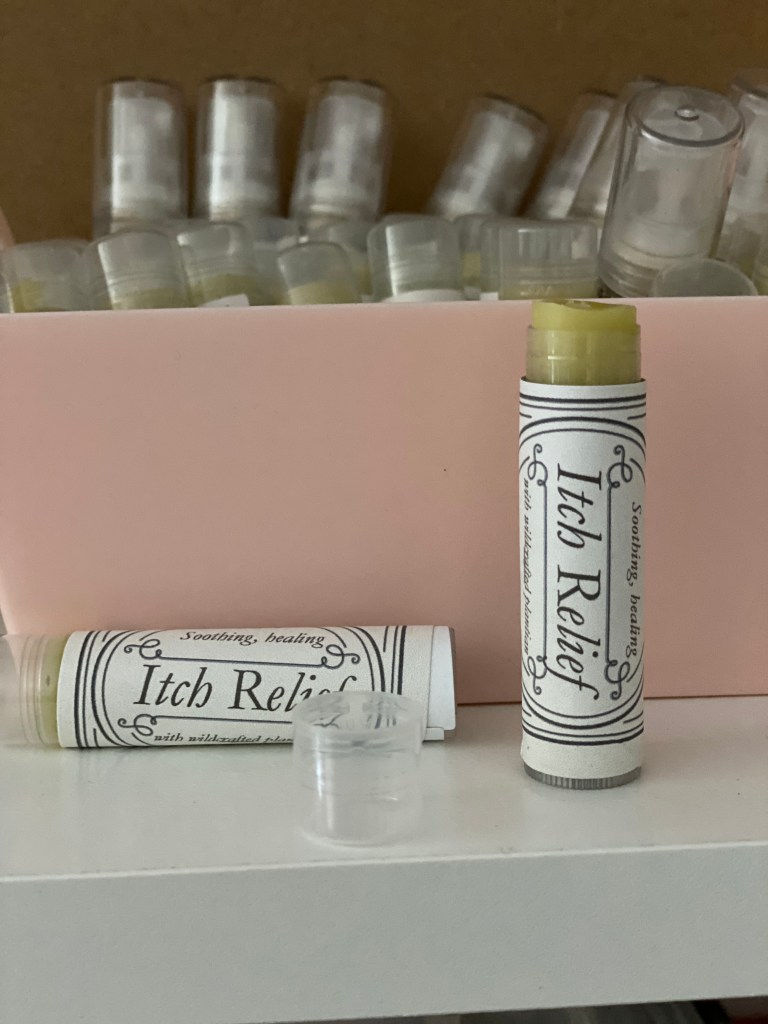
I make a calendula salve that you can purchase in a tin or in an easy-to-use chapstick form.  I love it for bug bite relief (anti-itch stick) and minor cuts and abrasions (skin-soothing salve)

Itch relief and skin-soothing salve

Bonus:

In a pinch, if you find yourself without any supplies at hand look for pine sap. Pine trees are easily identified by their clusters of needles that grow from a single clump. Their sap is anti-microbial, anti-fungal and it’s what the tree uses to protect itself when it gets injured so when harvesting the sap you need to leave some for the tree! It’s also very sticky so if you can use a twig to scrape some onto a leaf it will adhere the leaf to the skin like a band-aid – it is very difficult to get off though so if you can make it into a salve by adding beeswax and plant oil, you will have an easier time using it and keeping your wound clean.

Herbal Classes Update!

Hello Friends!

In the past I have hosted my herbal classes at my house but now I’ve come up with a way that you can host them at yours! We can do these either online or at a physical location of your choosing in Middle TN.

The great thing is that you can get your ticket for free by hosting once your class list is over 4.  As a host you would be responsible for inviting up to 10 friends, picking a topic, and choosing a day for your class.  If you are scheduling an in person class I’m happy to do the class at my house or another location within Middle TN (there might be a travel fee for locations more than an hour away from my address).  Tickets prices will depend on ingredients used in the class and the class minimum is 5 people including the hostess.  You can choose from the following classes or we can chat about customizing a class to your specific topic of interest.


1.) Immune system support for Cough, Cold, and Covid :  Elderberry Syrup, Fire Cider, Herbal Cough syrup, and White Pine needle Tea

2.) Mental Health: Mood support for anxious thoughts, melancholy, and stress relief     Herbal Mocktails, Digestive Bitters, and brain healing mushrooms

3.) Digestive Health, Probiotic Sodas, Herbal Meads, and Herbal Beers

4.) Allergy Season: Support for Hay fever with a variety of herbal teas, steams, nasal rinses

5.) Reproductive Health: (Mild) Herbal aphrodisiacs, reproductive system balance, hormone balance

6.) Intro to Foraging: this is seasonal and dependent on having access to private property to forage on and is an in person class only.

7.) Herbal Skincare: salves, oils, lip balms

8.) Herbal First Aid Kit: setting up your home pharmacy

9.) Making Herbal Remedies with Culinary Herbs

10.) Wildcard: I can develope a class based on your interests.

Feel Free to contact me to schedule your class or to get more information thornandthistleapothecary@gmail.com

Why You Need Homemade Mead

I have been obsessed with homemade mead lately and so far I’ve made 3 different recipes ranging from very basic (only 3 ingredients!), to pretty complex.  There’s so much room to explore but before I get into the how, I’d like to start with the what,  the why and the how.

What is Mead?

Mead is the most ancient documented form of fermented beverage.  It’s main ingredients are: honey, water, yeast and time.  That’s it! The end product makes between a 5-12% alcohol and while we know how damaging alcohol overindulgence can be to a body, mead is actually quite beneficial. (For comparison, commercial Kombucha normally has about .5% alcohol but homebrewed kombucha has up to 3% alcohol or more depending on how long you like yours to ferment).

Why drink Mead?

In doing my research on mead I was blown away by the number of health benefits associated with mead. According to mead historian Robert Gayre “From the earliest times, men have recognized that honey, and particularly mead, have strong revitalizing qualities, as well as healing virtues.” ( quoted from Sacred and Herbal Healing Beers by Stephen Harrod Buhner, p. 35).  Even our mythology respects mead as being a beverage both given by the gods, as well as being a beverage they drank themselves. Honey has long been found to possess antibiotic, antiviral, anti-inflammatory, expectorant, anti-allergenic, anti-fungal, and immune-stimulating properties. It’s important to note that all fermented beverages possess the medicinal actions of the ingredients they are made from. The fermentation process acts as a solvent, making different components more bioavailable and easy to absorb.  Honey also acts as a solvent and contains the medicinal properties of the plants the bees pollinated when they made the honey. It’s also important to remember that fermented beverages contain probiotics and enzymes that help support and balance the gut flora.  Want to try your hand at making some? It’s easy!

Basic Mead Recipe:

1 quart raw wildflower honey

3 quarts filtered water (no chlorine)

½ package of yeast (can be bread yeast but I prefer champagne yeast)

Glass fermentation vessel

Warm the honey gently (do not warm it over 70 degrees)  to make it easier to combine with the water.  Do not use distilled water (the minerals are stripped from distilled water and the yeast needs trace minerals), do not use tap water unless you know it has not been chlorinated or fluoridated. Filtered water is best. Add the yeast, place in a fermentation vessel with an airlock or place in a vessel with a lid that you can burp daily.  Do not fill all the way to the top as the yeast will produce a lot of bubbles in the first few days.  I always put my fermentation vessels on a tray in a cool place away from direct sunlight.  Fermentation can be messy if it “boils” out so make sure wherever you put it, it is protected. You can leave it 16-26 days before you bottle it for longer-term

 storage but you can also drink it at that point if you don’t have the patience to age it.  I’ll be sampling mine at 26 days.

This is a very basic recipe and if you are interested in making mead there are a ton of resources online to help.  I just wanted to show you how simple it can be to start your first mead.  Also, if you are local I will be teaching a class on probiotic sodas, meads and herbal beers. Tickets are available on eventbrite

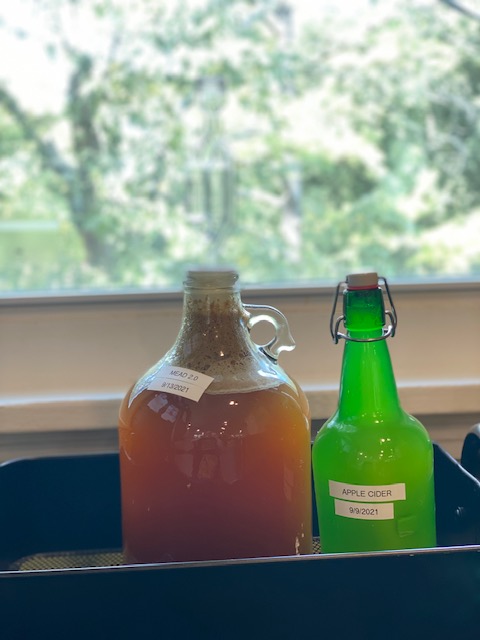
Mead (left) Fermented Apple Cider (right)

Probiotic Sodas for Gut Health

Sometimes it’s hard to make those big changes to support your health. Gross health food, sweaty exercise, fistfulls of suppliments – no one likes that and normally if it isn’t easy to do and pleasant it’s human nature to give up after awhile so lets make something tasty!!!

If you have tried Kombucha, Apple Cider Vinegar probiotic beverages or Water Kefir and don’t like it or can’t keep up with tending to your scoby, there is good news. There are many other ways to make a probiotic beverage that doesn’t require keeping a scoby or kefir grains alive. The secret is yeast.

Yeast:

The most basic way to make a probiotic soda is to inoculate a fruit beverage with some sort of “starter”. I use yeast. This can be wild harvested yeast (more on that later), commercial yeast, or you can even use some commercially available or home made kombucha to get things going. Once you have added your yeast of choice to your juice, sit back and let time do the work. Your beverage should have fermentation bubbles in a few moments up to a few hours depending on how much you added to your juice.

Liquid Yeast:

Wild yeast is any yeast that is acquired from the skin of something that naturally contains yeast. My two favorite ways to acquire wild yeast are from a ginger rhizome or a turmeric rhizome. Some people use apple skins or other fruit skins but the process is the same. Peel (or for ginger and turmeric can slice up the root) your fruit, add to a jar of water with a loose lid, add some sugar and check in on it daily until it starts to bubble. Once it is bubbling you can store it in the fridge or a pantry and feed it sugar every once in a while to keep it alive (I use sugar cubes so I can plop a few in without having to measure). To make it into soda use a tablespoon or two of active liquid and add to a flip top bottle (more yeast starter if your bottle is over 8 oz). Cap your bottle and check daily for signs of fizz. Once it has fizzed to your liking you can keep it in the fridge for up to a week to slow the fermentation. The process is the same if you are using kombucha to start the get things going. I’ve had mixed results with commercially available kombucha so I alway look to make sure it says it is raw. GT Dave is my favorite brand.

Dried Yeast

I ordered champagne yeast for my most recent batches of cider but you can actually use several different types of yeast including bread yeast. (Though the taste isn’t as great because it has bread like flavors and it has different strains of enzymes, but if that’s all you have, work with what you’ve got!). When trialing how much yeast to use I quickly realized that a little goes a long way and 1/2 tsp for 8 oz was too much! also, it’s important to make sure that the yeast is put in after you have filled the bottle half full because it has a tendency to stick to the bottom or float along the top. I stir mine in with a wooden skewer or a chopstick. My cider was nice an effervescent within a day.

How is drinking fermented juice beneficial to your health? Well, this type of yeast (Saccharomyces cerevisiae) is actually used medicinally and has antiviral and antibacterial properties. It has been shown to remedy chronic Candida overgrowth, and is a good medical choice for chronic acne, diarrhea and immune system stimulation. It is rich in B vitamins, chromium and selenium as well. How cool is that?

If you are interested in learning more about probiotic sodas, I’d love for you to join me on September 26,2021 for my class on Herbal Beers and Probiotic Sodas. Tickets can be found on Eventbrite

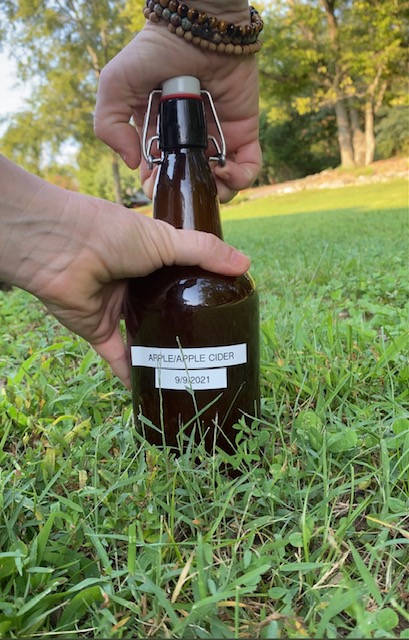
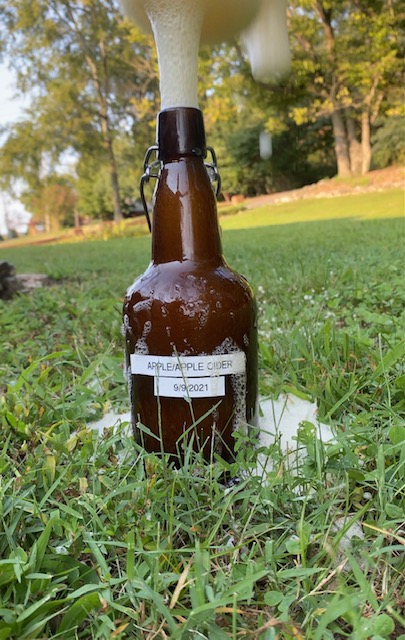
make sure you open your bottle outside, sometimes it can be very messy!

Why you should try White Pine needle Tea

About a week ago my husband had to get the Cvd vax for work and he had some pretty intense reactions. As it turns out, if you already had a pretty significant case of Cvd and then get the vaccine – your body is primed to fight harder. In order to help him through his symptoms I had to do a lot of research and everything seemed to point back to white pine needle tea. So while I am not a doctor and do not give medical advice, I can just tell you what I learned as the white pine needle tea was key in helping him recover.

1.) White Pine needle tea has been used to support the body as it fights the Cvd virus.

The wonderful thing about this tea is that it helps if you have acquired the cvd virus naturally, or through vaccination. One of the ways it does this is simple: pine needle tea is full of vitamin C and A, it improves red blood cell production, boosts the immune system, helps relieve chest congestion and can also be used as an expectorant for coughs. It also contains a chemical called Suramin which can inhibit the effects of the coagulation cascade (excessive coagulation causes blood clots, mini-clots, strokes, and unusually heavy menstrual cycles.). It’s herbal actions are: anti-inflammatory, antiseptic, expectorant, diuretic, antibacterial, circulatory stimulant, antispasmodic, and astringent. If you are looking for the immune boosting benefits or the symptom relief, white pine needle tea might be for you! (Always do your own research before starting a new herb to make sure it is a good idea for your body. I do not know your particular health situation so I cannot tell you if this tea is a good one for you add to your wellness routine.)

2.) White Pine is easy to identify for beginners and grows throughout the United States

If you live in the United States you might have some white pine growing nearby at a park, in a forest or even in your own backyard. In the eastern United States you will most likely find Eastern white pine (Pinus strobus), in the western United States you will find Western white pine (Pinus monticola) and they both can be identified easily (assuming you can identify an evergreen tree with needles). Once you find your evergreen, look and see how the needles are fixed to the plant. A spruce or fir will have single needles growing directly from the stem. A pine has needles that grow out of a sheath that looks like a hair follicle called a fascicle. White pine can be identified by the number of needles growing out of that fascicle – there should be 5 needles and they should be around 3 inches in length. White pine is the only native pine that has five needles per fascicle in eastern North America. The bark of young trees is smooth and greenish-brown, while older trees have darker gray-brown and deeply fissured bark. (It is important to make sure of your species because not all pine needles are the beneficial kind)

3.) White Pine needle tea can be very easy to make!

After confirming that your fresh pine needles are white pine, give them a rinse and place a small handful in a pot with about 4 cups of water. You can chop up the needles first if you want a stronger flavor (in the spring when the needles are fresh you may want to skip this step.) Make sure you put a lid on your pot. You don’t want all your beneficial aromatics to be lost in the steam. Simmer for 20 min. Easy!! If you want to add some more anti-viral and protective benefits you can add things like an inch of fresh ginger or turmeric (or both), or a couple of star anise. Play with the flavors and make something you like drinking. Once it has cooled you can add raw honey or a sweetener of choice. I like it unsweetened and it is a very mild tasting tea.

white pine (Pinus Strobus) and ginger (Zingiber officinale)

As you can see, there are many benefits to this tea and as it is relatively inexpensive to purchase (see my shop listing) and free to forage. Why not try it?

Herbal First Aid Kit

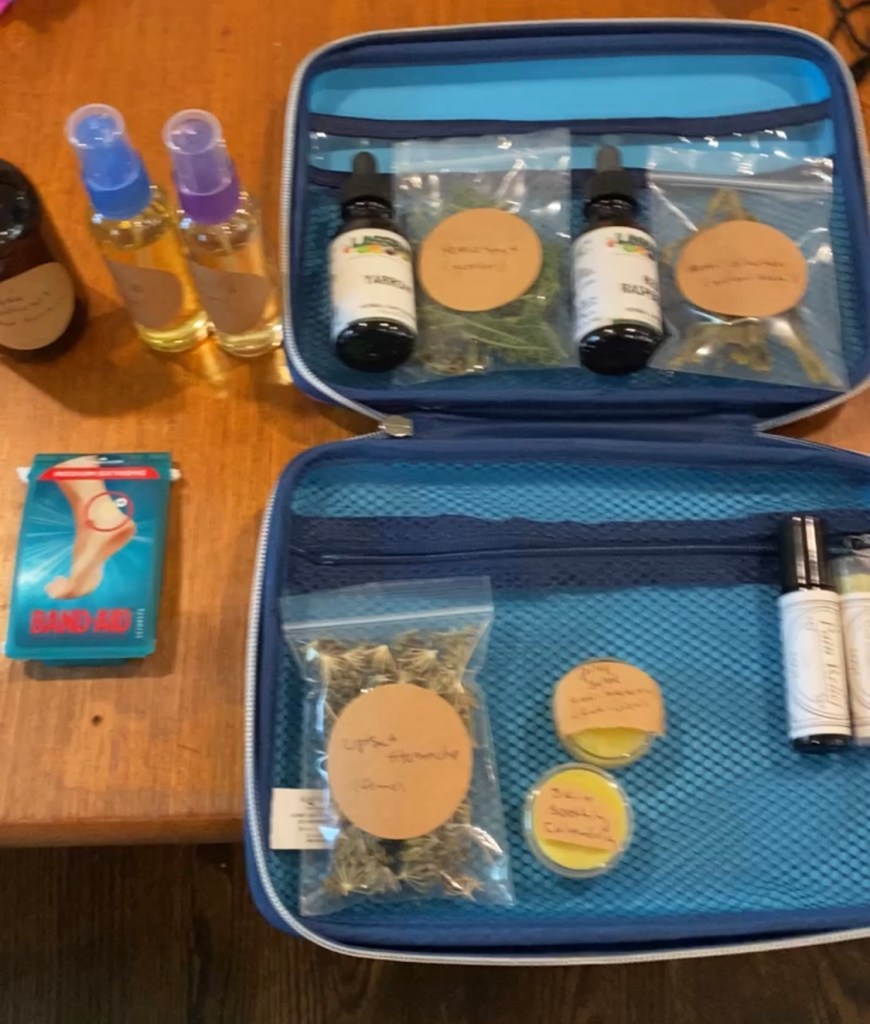
A couple of weeks ago I put together an herbal first aid kit for my backpacking trip with my daughters. I was excited to grab things I had already made and realize that with the exception of band-aids I had made every item in the kit myself! Here is a rundown of what was in the kit

Pine Salve: natures neosporin. It is anti-viral and anti-bacterial

Anti-itch stick: this is a calendula/plantain salve for rashes and bugbites that contains essential oils as well and reduces inflamation, promotes wound healing and helps kill the itch. I put it in a chapstick containter for easier application.

Bug Spray: I used a variety of essential oils in an olive oil base and it felt good on my skin. It also worked pretty well and kept me from getting eaten alive by mosquitos. It also kept those pesky gnats away.

Sunburn relief: just a simple rose hydrosol,

Headache and muscle tension pain roller with essential oils (this came in very handy and really helped with muscle aches)

I also brought some loose herbs:

Fennel to calm upset stomach

Yellow dock and red raspberry leaf in case we encountered a diarrhea situation (we didn’t end up needing this, whew!)

Yarrow as a styptic and wound healer if we ended up with cuts (we also didn’t need this, fortunately.)

I posted about it on my tik tok channel and got over 10K views! I truly believe this past year has opened people’s eyes to the fragility and ineffectual nature of our modern healthcare system and many people are turning to alternatives to modern mainstream medicine. Over the next month or so I’ll be teaching a class on how to assemble an herbal first aid kit (if you are local I’d love to have you come!), I’ll be creating my own herbal first aid kit for sale in my etsy shop: Thorncraft Apothecary, (some of the items I put in my kit are also available in my shop right now) and putting together a PDF file of items to include if you want to make your own Herbal First Aid Kit!

#ThornandThistleApothecary #herbalism #herbalist #herbalhealthcare #herbalfirstaid #DIY #firstaid #firstaidkit #salve #herbalsalve #herbaltea #alternativemedicine

What the Heck is Queen of Hungary Water?

Origins:

The exact date of the invention of Hungary water is lost to history, though some sources say it dates to 1370 or the late 14th century  According to legend, it was formulated at the command of the Queen Elizabeth of Hungary. Some sources say that a hermit or monk-recluse first gave it to the Queen of Hungary, though most likely it was made by a court alchemist or a monk-alchemist. In some stories the water was given to the queen in order to help her headaches, in others it was given as a beauty elixir to preserve a youthful appearance. In any case it was famous as a fragrance and a remedy for facial irritations (including redness and acne) – so much so that versions of this recipe have been used for almost 700 years!! (from Wikipedia)

By Simone Martini – The Yorck Project (2002) 10.000 Meisterwerke der Malerei (DVD-ROM), distributed by DIRECTMEDIA Publishing GmbH. ISBN: 3936122202., Public Domain, https://commons.wikimedia.org/w/index.php?curid=154876

My Version

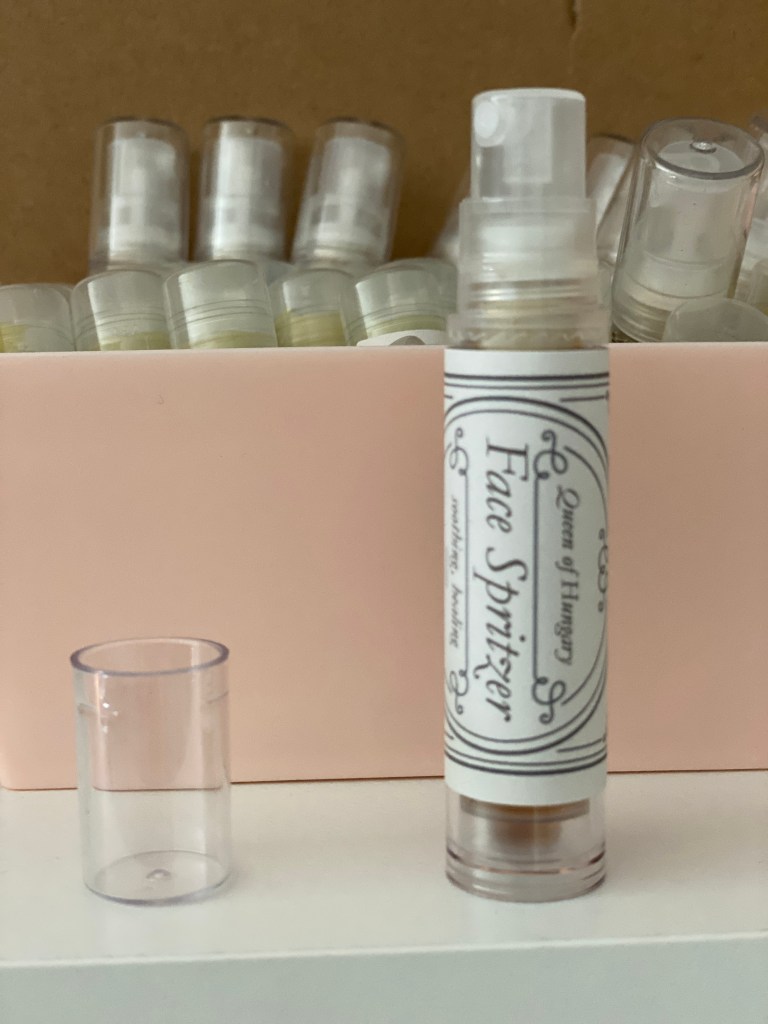
The recipe I use for Queen of Hungary water includes 13 different botanicals that are extracted in witch hazel (for the face mist) or almond oil (for the moisturizing face oil). I left them to extract for 3 months to get the most benefit and I absolutely love the result! I have very dry skin and often simply cleanse it by spritzing my face with Q of H water and wiping it dry with a damp washcloth before applying the oil and doing a mini- face massage. While it is technically a facial toner, each of the flowers share a specific benefit.

Queen of Hungary Water. Keep it refrigerated for a nice refreshing spritzer on a hot day!

Botanical Ingredients:

  • Lemon Balm
  • Lavender
  • Chamomile
  • Rose
  • Calendula (foraged)
  • Comfrey leaf
  • Lemon Peel
  • Rosemary (foraged)
  • Sage
  • Mint (from my garden)
  • Elder Flower (foraged)
  • Helichrysum
  • Organic Witch Hazel

(adapted from Mt. Rose Herb’s recipe which was adapted from Rosemary Gladstar’s recipe which was adapted from many folk recipes all the way back to the Queen of Hungary herself!)

Not to name drop, but many celebrities and make up artists are turning to versions of this recipe to use under or over make up and while my recipe might be a bit humbler than other higher priced brands out there, I think its pretty funny that at the end of the day rich and poor alike are returning to more natural skin care products made out of something as simple as a few handfuls of flowers that have been used for centuries. (You can read the story in the Hollywood reporter https://www.hollywoodreporter.com/news/general-news/makeup-monday-a-cult-fave-780181/)